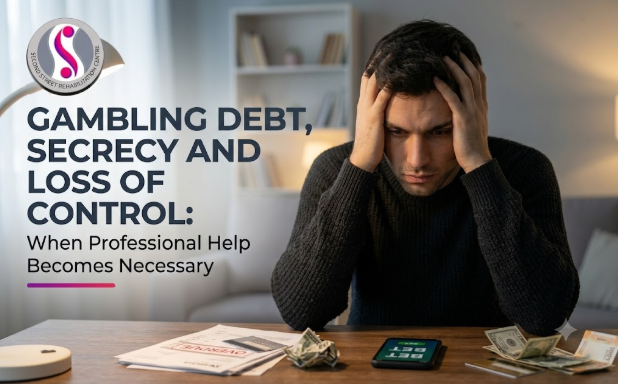
Debt is often the point at which a gambling problem becomes visible to the family. By then, the behaviour may have been hidden for months: small loans, cash withdrawals, credit-card use, app-based borrowing and repeated attempts to win back earlier losses.
The size of the debt matters, but loss of control matters just as much. Someone can have a serious gambling problem before the numbers become huge.
Why does secrecy grow so quickly?
A person may hide gambling because they believe the next win will repair everything before anyone finds out. Each new loss makes disclosure harder. That creates a cycle: hide the loss, borrow, gamble again, hide the new debt.
Families often discover the problem through a missed EMI, an emptied account or a call from a lender. The first instinct may be to demand every password and transaction immediately. Financial facts are necessary, but the conversation also needs to assess safety, current gambling and mental health.
What does loss of control look like?
The World Health Organization describes gambling disorder through impaired control, increasing priority given to gambling and continuation despite negative consequences. In daily life, that may look like betting after deciding not to, chasing losses, cancelling family plans to gamble, using essential household money or continuing after debt has become unmanageable.
This is not the same as being careless with money. It is a behavioural health problem that can require treatment.
Should the family clear the debt?
There is no single answer. Paying an urgent bill may protect housing, education or another essential need. Repeatedly clearing all gambling debt without changing access to money or starting treatment can also allow the cycle to continue.
Before making large financial decisions, families may need independent financial or legal advice. Shared assets, guarantees and loans can create consequences for more than one person.
If the person is also using alcohol or drugs, professional rehabilitation and recovery care may be relevant because multiple addictive behaviours can complicate assessment and recovery. Where gambling is the primary problem, the treatment should still be specific to gambling rather than copied from a substance-use programme.
What does treatment need to address?
A gambling rehabilitation programme should examine urges, chasing, thinking errors, emotional triggers, money access, digital habits and co-occurring mental-health conditions. Therapy may help the person challenge beliefs such as “I can recover it tonight” or “after so many losses, a win has to come”.
Practical barriers can support the psychological work. Self-exclusion, app blocking, limits on access to credit and agreed financial oversight may reduce opportunity. The plan should be transparent. Secretly taking control of an adult’s accounts can create legal and relationship problems of its own.
How do you rebuild honesty without constant interrogation?
Set a regular time for financial review rather than demanding proof every hour. Agree on which accounts need transparency and what happens if new borrowing appears. The person should understand that trust returns through consistent behaviour, not one apology.
The family also needs permission to protect itself. A spouse may need separate access to household funds. Parents may decide not to lend more money. These boundaries can exist alongside support for treatment.
Suicidal risk must be taken seriously
Gambling debt can bring intense shame, fear of exposure and hopelessness. A person facing creditors or family discovery may feel trapped. If they talk about death, self-harm or the family being “better off without me”, ask directly about suicide and seek urgent professional help when risk is present.
Do not leave a person alone during an immediate suicidal crisis simply to continue checking bank statements. Safety comes first.
What does recovery look like after the debt is disclosed?
The first weeks may involve stopping gambling access, mapping debts, beginning therapy and restoring a normal sleep routine. Later work may focus on rebuilding trust, managing money, returning to work concentration and planning for high-risk events such as payday or major sports tournaments.
For people in Mumbai, Thane or other Indian cities, gambling can be entirely digital, so avoiding a physical betting location may change very little. Treatment needs to include phone use, payment apps, credit and advertising exposure.
Recovery also needs a plan for setbacks. If the person gambles again, find out what happened before the bet and whether new debt or suicidal thoughts are present. The response should be fast and factual.
Professional help becomes necessary when control is failing, harm is continuing and family efforts are no longer enough. The goal is not merely to balance the accounts. It is to stop the cycle that keeps creating new losses.
Once the immediate crisis settles, families may be tempted to demand a promise that gambling will never happen again. A better agreement is behavioural: no new borrowing, treatment attendance, agreed account transparency and early disclosure if an urge or lapse occurs. Promises are easy to make under pressure; observable actions are easier to review. This also gives the person a way to rebuild trust gradually. Recovery from gambling harm is not only about stopping bets. It is about making finances, communication and daily behaviour predictable again.