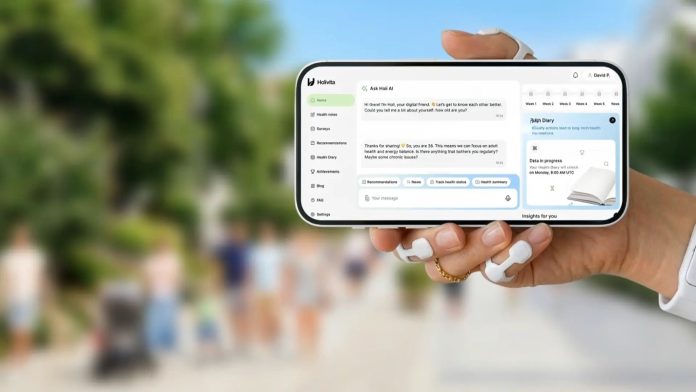
Most people do not have a single, coherent record of their health. A blood test may be stored in a clinic portal, medication details in an email, symptoms in memory, and an old scan report somewhere in a folder on a laptop. Even people who pay close attention to their health can struggle to reconstruct what happened six months ago, which symptoms appeared first and what changed after a new medication or routine.
Tools such as https://www.holivita.ai/ are built around a simple idea. Health information becomes more useful when it is kept in context rather than as a collection of disconnected files. An AI health companion can help bring notes, reports and observations together, explain unfamiliar information and make it easier to prepare for a conversation with a healthcare professional. Its value is not in replacing medical judgment, but in helping a person make better use of the information they already have.
Health information is usually fragmented
A typical health history develops across many systems. One clinic stores laboratory results, another has imaging reports, a pharmacy keeps prescription information, and a fitness app records sleep or activity. None of these sources necessarily shows the full picture. A doctor may see part of the medical record, while the patient remembers details that were never formally documented.
Fragmentation becomes more noticeable when a problem develops gradually. Consider recurring headaches, fatigue or digestive symptoms. One episode may seem unimportant, another may be mentioned during an appointment, and a third may occur after a change in medication or routine. Months later, it can be difficult to remember whether these events followed a pattern or were unrelated.
The same problem applies to documents. Laboratory reports often contain dozens of values, many of which are meaningless to a non-specialist without context. Imaging reports use clinical terminology that may be difficult to interpret. Discharge summaries can be dense and written for medical professionals rather than patients. Keeping these files is useful, but storing them alone does not make the information easier to understand.
A personal health record becomes more valuable when documents and everyday observations can be placed on the same timeline. That does not turn a collection of notes into a diagnosis. It simply makes the sequence of events clearer.
Context is what turns records into a health story
A single symptom rarely explains much by itself. “Headache” is a piece of information, but a record showing when it started, how long it lasted, what other symptoms were present and whether anything changed beforehand is far more useful. Context gives individual observations a place in a broader sequence.
This is one area where AI can assist without taking over the role of a clinician. A health companion can help organize repeated notes, summarize documents and identify information that appears several times. It can also make long records easier to review by turning scattered entries into a concise chronology.
A useful personal health record may include:
- symptoms and when they appeared
- medications and changes in dosage
- laboratory and imaging reports
- sleep, energy and other recurring observations
- major illnesses, procedures or hospital visits
- questions raised during previous medical appointments
- changes in diet, activity or other routines that may provide context
The point is not to collect data for its own sake. A record becomes useful when it helps answer practical questions. When did this symptom begin? Was a medication changed before it appeared? Did the problem improve and return? Was the same laboratory marker abnormal on more than one occasion? These questions are difficult to answer from memory but much easier when information has been kept in sequence.
AI can translate without pretending to diagnose
Medical language often creates a barrier between information and understanding. A patient may receive a test result online before speaking to a doctor and see terms that sound alarming simply because they are unfamiliar. Searching each phrase independently can make matters worse, especially when general internet results describe rare or severe conditions without explaining how relevant they are to one individual.
An AI health companion can help by translating technical language into more accessible terms. It may explain what a laboratory marker generally measures, define terminology in a radiology report or summarize the main points of a longer document. That can make the next conversation with a clinician more productive because the patient arrives with a clearer idea of what needs clarification.
There is an important boundary here. Explaining information is not the same as interpreting it clinically. A value outside a reference range does not automatically indicate disease, just as a value inside the range does not rule out every problem. Age, symptoms, medications, medical history and the reason a test was ordered can all matter.
The safest role for AI is therefore supportive. It can reduce the friction involved in reading and organizing information, while medical conclusions remain with qualified professionals who can evaluate the full clinical situation.
Better preparation can improve a doctor visit
Medical appointments are often short, and memory is not always reliable under pressure. A person may remember the least important detail and forget the symptom that prompted the appointment in the first place. Questions that seemed obvious at home can disappear once the consultation begins.
A structured health history can make those minutes more useful. Instead of trying to reconstruct events from memory, a patient can bring a short summary showing when symptoms began, what has changed and which tests or treatments have already been tried. This does not mean handing a doctor a complete archive of every health-related note. A concise timeline is usually more useful than a large volume of unsorted information.
AI can help prepare that summary by identifying repeated themes and reducing a longer record to the points most relevant to the appointment. It can also help generate questions based on information already stored. A person might want to ask whether a medication could be related to a new symptom, whether a test should be repeated or what changes would justify seeking care sooner.
That preparation gives the clinician clearer information without altering who makes medical decisions. The doctor still evaluates symptoms, performs an examination when needed, orders tests and decides how findings fit together. The technology supports the conversation rather than replacing it.
A useful system should stay under the user’s control
Health information is more sensitive than an ordinary collection of notes. A system that stores symptoms, laboratory reports and medical history needs to treat privacy as a core function rather than an optional feature. Users should understand what information is stored, how it is protected and whether they can remove it.
Control also matters because a personal health record should remain useful beyond one specific interaction. People may want to export a summary, share selected information with a doctor or delete something they no longer want stored. A tool that collects information without giving clear control over it creates a new problem instead of solving the old one.
The same principle applies to AI-generated summaries. They should be treated as working aids, not authoritative medical records unless they have been reviewed and confirmed. If a summary contains an error, omission or misunderstanding, the user should be able to correct it. Health information is too important to be accepted automatically just because software presented it neatly.
The most practical role for an AI health companion is therefore modest but valuable. It can help keep information together, make documents easier to understand, preserve the sequence of events and reduce the effort required to prepare for medical care. A clear health story does not provide a diagnosis on its own, but it gives both the patient and the clinician a better starting point for finding one when necessary.